
On April 1, the bell rings to mark one of humanity’s oldest unbroken traditions. Assyrians around the world welcome the new year, Akitu, which this year marks the beginning of the year 6776.
Akitu, or Kha b’Nisan (April 1), is not only a festival celebrating spring but also a tribute to the dawn of civilization. The festival dates back thousands of years to ancient Assyria, where it was the most important event in the Assyrian and Babylonian calendars.
The Roots of Mythology: The Struggle Between Order and Chaos
One of the earliest documented New Year’s celebrations dates back to the ancient Assyrian Empire, where it was celebrated as Akitu. The celebration was a tribute to the gods and typically marked the arrival of spring and the beginning of the new year according to the calendar of that time. With the arrival of spring, nature comes to life, and flowers, trees, and all other vegetation regain their fertility. Therefore, in ancient times, it was considered customary for the new year to begin with this renewal of life. People thus celebrated nature’s reawakening.
The celebration also has its roots in an ancient mythological tale about a goddess’s love. Inanna, the goddess of fertility, war, life, and death. In the story, she falls in love with a farmer named Tammuz. Ishtar goes to Tammuz’s mother, Mingal, to seek her blessing and permission to marry Tammuz. Tammuz becomes the god of fertility, and the result of their marriage is a greener earth full of vegetation; people and animals become more fertile and multiply.
Year 6776: A calendar system with deep roots
While the Gregorian calendar marks the year 2026, the Assyrian calendar enters its 6776th year this year. This calendar begins in 4750 B.C., which, according to tradition, marks the time of the first steps toward Assyrian civilization and the founding of the city of Ashur. This continuity serves as a strong marker of identity for the Assyrian people, who, despite historical persecution and dispersion into the diaspora, have preserved their heritage.
Celebrations at cultural associations around the world
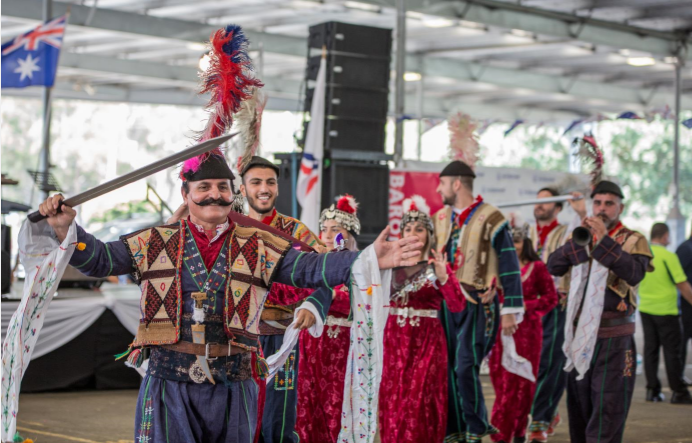
Although the Assyrian people are now scattered across the globe, the Akitu celebration is stronger than ever within cultural associations. From Södertälje in Sweden to Chicago in the U.S. and the remaining Assyrian villages in the Nineveh Plains in Iraq, the day is celebrated with pride, featuring traditional costumes, music, dancing, cultural lectures, and more.
Akitu is more than just a celebration. It is a bridge between the past and the living present. When Assyrians around the world say “Akitu Brikho!” (Happy New Akitu!), or “Rish shato Othureyto brikhto” (Happy New Assyrian Year), it is a celebration of spring, the arrival of the new year, and resilience and cultural survival.

