History does not live solely in books and archives. It also lives on in people’s stories, memories, and artistic expressions. For the Assyrian people, art has become an important means of preserving their identity, culture, and historical memory. One of the artists who carries on this legacy with great passion and sensitivity is Nahrin Malki.
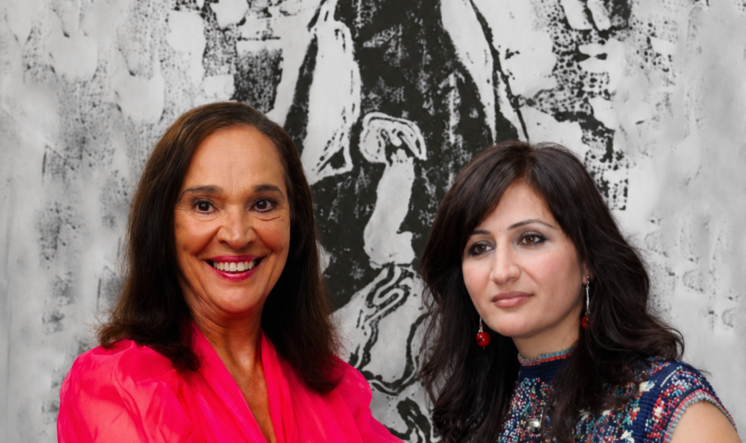
Nahrin Malki was born in Syria and initially trained as an artist in her home country. Twenty-four years ago, she left Syria and settled in the Netherlands, where she continued her art studies at the AKI Academy of Art in Enschede and graduated in 2011. Nine years ago, she moved to Sweden, where she continues her artistic work today.
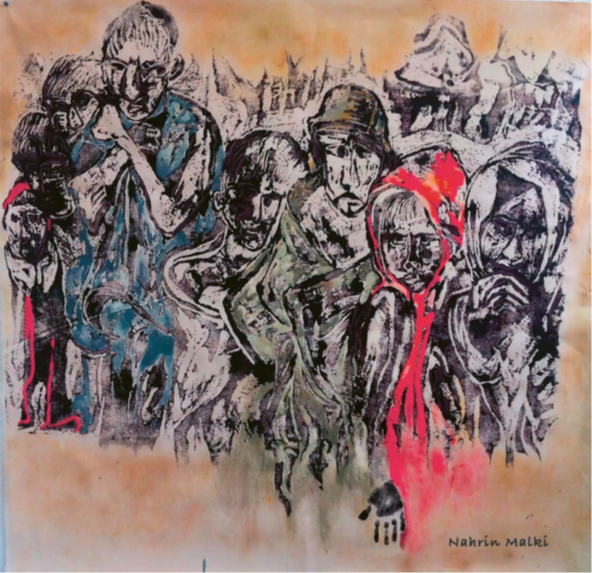
Through her work, Nahrin Malki depicts people’s experiences of loss, migration, grief, and survival. Her art bears clear traces of the history of the Assyrian people and the traumas that generations have been forced to live with. At the same time, it expresses hope, resilience, and human dignity.
Seyfo – a wound that continues to affect generations
In 1915, Armenians, Pontic Greeks, Assyrians, and other Christian minorities in the Ottoman Empire were subjected to widespread persecution, massacres, and forced deportations. This tragedy is known as Seyfo, which means “sword” in Assyrian. Hundreds of thousands of people lost their lives, and many were forced to leave their homes and their historic homelands in Mesopotamia.
The Seyfo is not merely a historical event. Its consequences live on in family memories, stories, and collective trauma. Many survivors still grapple with the grief of lost loved ones, destroyed communities, and a culture that was subjected to systematic attempts at eradication.
Despite this, knowledge of the Seyfo has long been limited outside the Assyrian community. That is why it is important to continue documenting, sharing, and fostering understanding of this part of history.
The Important Role of Women in Preserving Memory
The Assyrian people need more women who write, conduct research, tell stories, and document the history of the Seyfo and Assyrian culture. Women can play a crucial role in passing this knowledge on to future generations.
When women share their stories about the Seyfo from a woman’s perspective, experiences that have long been overlooked come to light. Stories about mothers, daughters, families, and survivors foster a deeper understanding and inspire empathy in people of all backgrounds.
Through literature, journalism, research, documentaries, podcasts, social media, and art, women can help break the silence surrounding historical traumas. They can also build international networks that promote awareness of the history and culture of the Assyrian people.
Art as Testimony
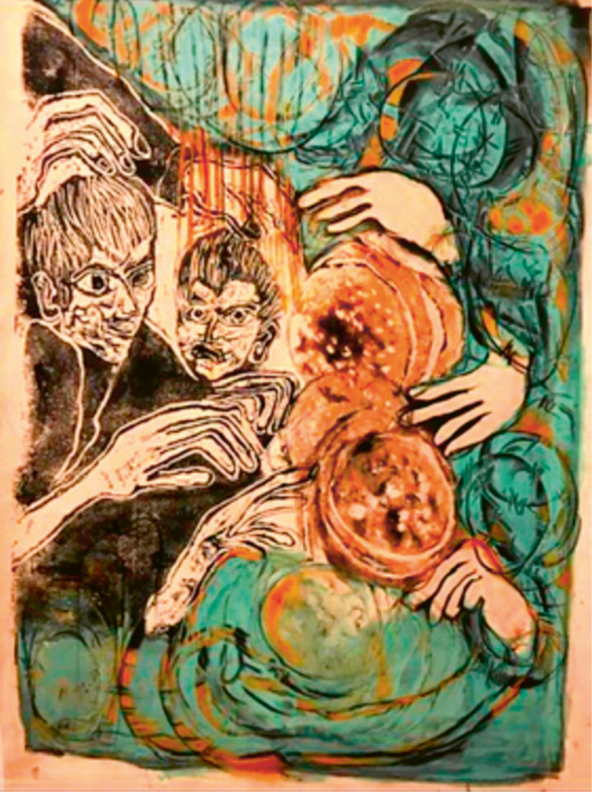
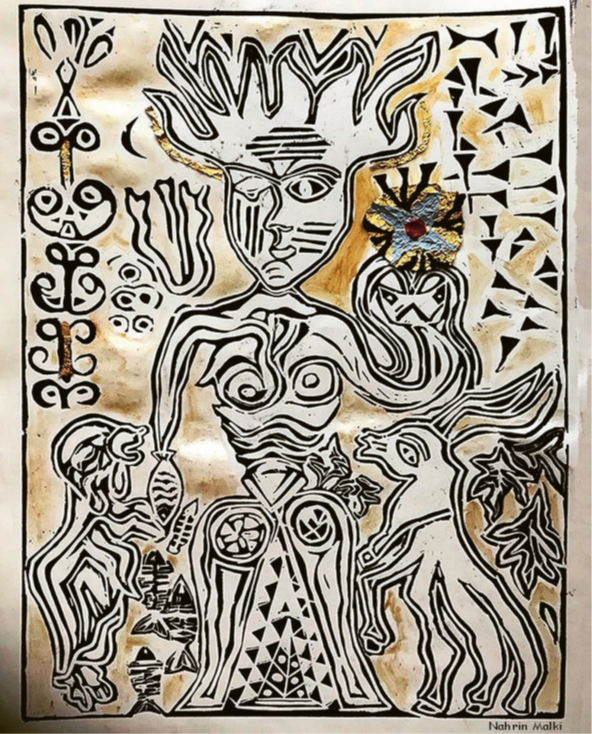
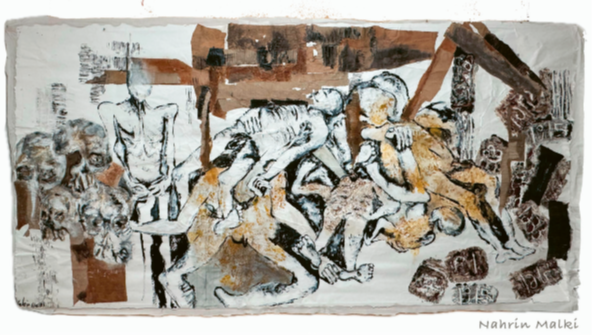
Nahrin Malki uses art as a language to convey what is sometimes difficult to express in words. Nahrin Malki’s artistic practice is based on a technique she developed herself, in which prints, stamps, and repetitive movements form the foundation of her creative process. By working with multiple layers of color, form, and imprints, she builds up visual surfaces reminiscent of sediment or archaeological strata—traces of memories, experiences, and stories that gradually emerge.
The work is both physical and meditative. In the rhythmic repetition of pressure and movement, an artistic language emerges in which the body’s memory meets the rhythm of nature. Nature appears not merely as a motif or backdrop, but as a living presence within the works. Here, an interplay arises between the human and the animal, between the material and the spiritual.
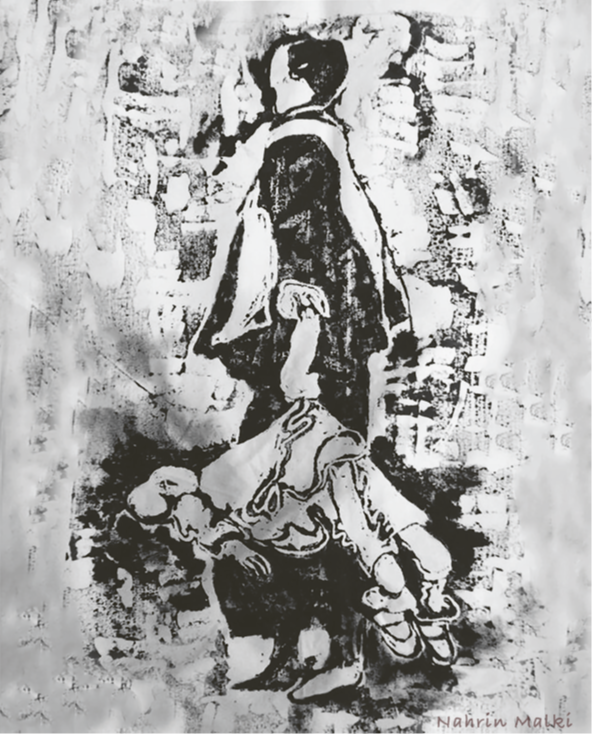
A recurring theme in Malki’s art is the female body as a bearer of both trauma and hope. Through her images, she reveals how experiences of loss, migration, and survival can be passed down through generations—not only through stories but also through emotional and physical imprints. Her work bears witness to pain and vulnerability, yet simultaneously embodies a strong yearning for reconciliation, community, and human dignity that transcends borders, religions, and time. She herself describes how her art explores the cyclical nature of human suffering throughout history.
Although she now lives in a peaceful environment, she feels a strong connection to the ongoing conflicts and abuses affecting people around the world, especially in her home country. She emphasizes the importance of acknowledging other people’s suffering and believes that indifference to injustice is a matter of conscience.
In her work, we often encounter anonymous people in precarious and vulnerable settings. Through movement, emotion, and symbolism, she creates images that document, evoke memories, and invite reflection. Her art becomes a space where pain, memory, and resilience converge.
Particularly powerful are the works that address the Seyfo and the history of the Assyrian people. The paintings capture the grief of people who have been forced to leave their homes, but also the strength of those who continue to pass on their identity through the generations.
Having the courage to talk about trauma and grief
An important part of healing from historical trauma is having the courage to talk about it. Many families still carry stories of loss, flight, and survival that have rarely been given a voice in public discourse.
Healing begins when people feel heard. By listening to stories, documenting experiences, and creating spaces for dialogue, both individuals and communities can come to terms with the past.
Art plays a unique role here. It can express emotions that are difficult to put into words and foster understanding across cultural and linguistic boundaries.
An international artistic career
Nahrin Malki's artistic work has garnered attention both nationally and internationally. She has participated in exhibitions in Sweden, the Netherlands, Germany, Poland, Norway, and the United States.
Recent exhibitions include participation in the Spring Salon at Liljevalchs in Stockholm in 2025, the Nobel Peace Center in Oslo in 2024, the U.S. Institute of Peace in Washington, D.C., in 2023, as well as several solo exhibitions in Sweden and the United States.
Through her art, she continues to build bridges between history and the present, between personal experiences and universal human issues.
The memory must live on
Seyfo isn't just about the past. It's also about the future. If we don't tell this story, it risks being forgotten.
That is why we need writers, artists, researchers, journalists, and socially engaged individuals who continue to document and share knowledge. It is particularly important that more women take on roles as storytellers and cultural ambassadors.
Through her artistic work, Nahrin Malki demonstrates how art can serve as a living archive of a people’s history. Her work reminds us of the importance of memory, human rights, and humanity.
When we look at her photographs, we see more than just the history of the Assyrian people. We also see humanity’s ability to survive, remember, and continue to create despite grief and loss.
Nahrin Malki’s art has also become part of the documentation efforts aimed at preserving knowledge of the history of the Assyrian people. Several of her artworks related to the Seyfo are published in my book *Naum Faiq’s Struggle for the Rights of the Assyrian People*. Through the interplay between text and image, our understanding of the human experiences, the grief, and the strength that characterize the stories of the Seyfo and its aftermath is deepened.
Memory must live on through stories, research, art, and people’s determination to pass history on to future generations. Nahrin Malki’s art makes an important contribution to this work and reminds us of the importance of never allowing people’s suffering to be forgotten.
Jönköping, June 2026
Nahrin Malki – Art