
After thousands of years in Mesopotamia, the Assyrians/Syriac people risk losing their historical continuity. Without long-term collective protection—whether in their homeland or in the diaspora—the continuity of one of the world’s oldest peoples is under threat.
Today, about 80 percent of us live outside our homelands in Iraq, Syria, Turkey, and Iran. We did not leave primarily to seek wealth or adventure, but because war, persecution, discrimination, insecurity, and political powerlessness over generations have made it increasingly difficult to lead a dignified and stable life.
The trend is already clear. Soon there may be more Assyrians in Sweden than in the entire Middle East.
What now threatens the Suryoye is therefore about more than just migration. It is about the gradual disappearance of one of the world’s oldest peoples from the land where our civilization once emerged.
What makes this phenomenon difficult for the outside world to understand is that it rarely manifests itself as a single catastrophe. The world often takes notice of genocide only when it occurs openly and dramatically—through massacres, wars, or sudden ethnic cleansing.
But people can also fade away gradually—and rarely overnight.
First, their rights, institutions, and security are eroded. This is followed by migration, demographic collapse, and finally the dissolution of their very historical presence.
People are disappearing due to land loss, weakened institutions, chronic insecurity, and the constant exodus of younger generations who no longer see a future in their homeland.
We have effectively been driven out of Turkey, and the situation continues to deteriorate in Iraq and Syria. Assyrians/Suryoye still lack long-term security guarantees, genuine political representation, and stable institutional protection in many of their historical territories. In practice, we are often dependent on stronger political actors, militias, or regional powers for our survival.
For stateless peoples, this creates a particular vulnerability. Without political power, territorial protection, or their own institutions, even the most basic sense of continuity becomes fragile.
At the same time, many of us have built successful lives in Europe, North America, and Australia. The diaspora can preserve language, traditions, and identity over a long period of time. But no diaspora can, on its own, replace a living, historical homeland.
History clearly demonstrates this. In just a few generations, many immigrant groups in the United States lost both their language and their strong cultural ties to their countries of origin. For stateless peoples, this process can occur even more rapidly, as they lack a state, a territory, and institutions that continuously renew their identity across generations. Added to this is the fact that we are geographically scattered across large parts of the world and lack a clear demographic center even within the diaspora.
A civilization is not just people. It is language, memory, culture, traditions, sacred sites, and the living connection between people and the land. This sense of belonging is shaped and passed on through schools, the workplace, local communities, and social bonds.
In the long run, such continuity can only survive through some form of lasting collective protection:
- through independence,
- federal self-government, or
- minority status in functioning democratic states.
That is why it is also crucial that Suryoye’s political movements, regardless of ideological or organizational differences, ultimately work toward one of these paths.
Without this, even very ancient civilizations can disappear without a trace.
The question, therefore, is not merely whether the Suryoye can survive physically. The question is whether we can continue to exist as a people with deep roots in Mesopotamia—or whether we will gradually survive only as a diaspora and, ultimately, as a memory.
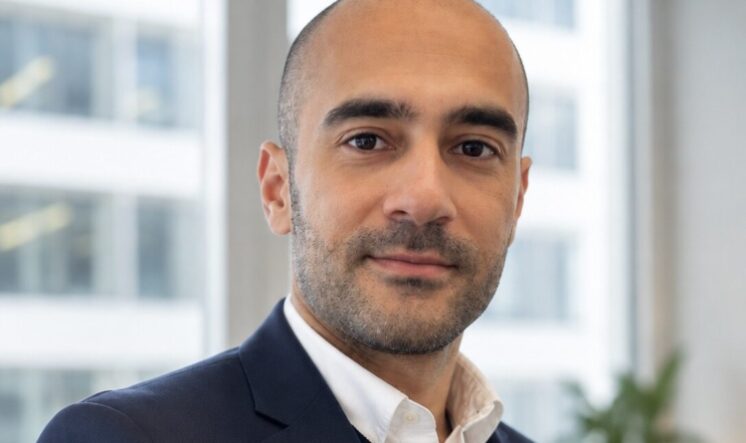
Michael Merdoyo is a candidate for the Stockholm Regional Council on the Civic Coalition ticket
The views expressed in this text are those of the author and are not necessarily shared by Huyada. We provide a platform for diverse voices within the Assyrian community and welcome open and respectful debate.

