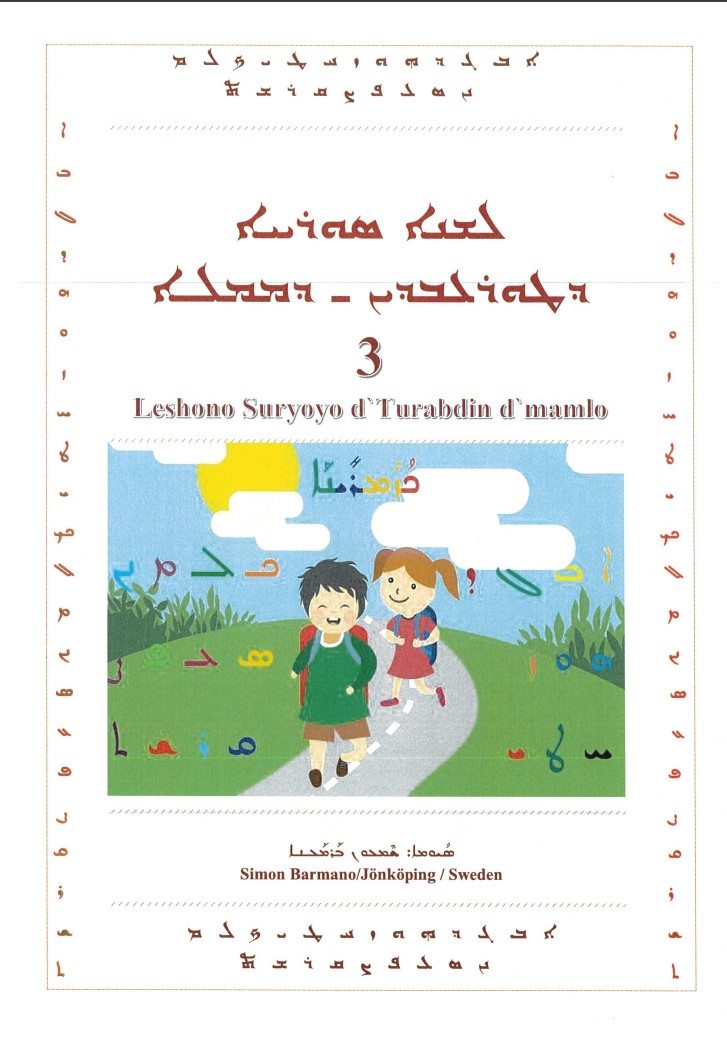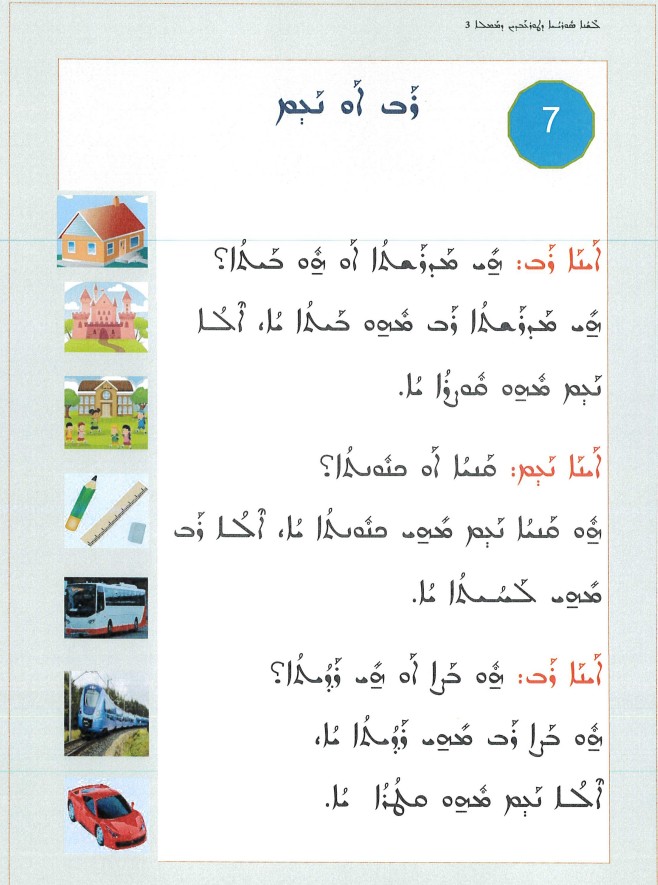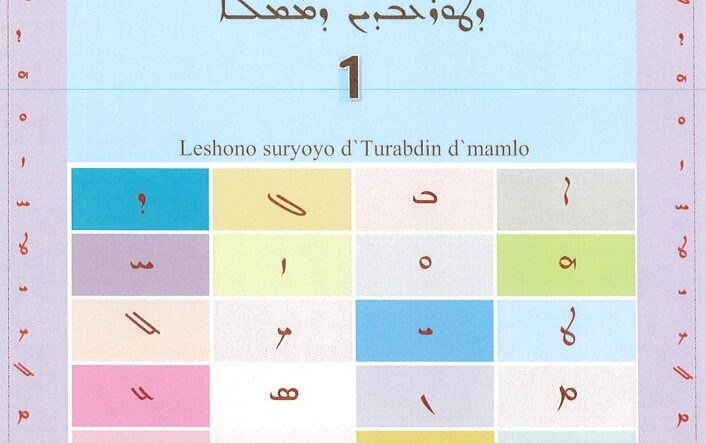
It all started with a simple question from a student: “Why don’t we read the way we speak, malfono?” For native language teacher Simon Barmano, that question became a turning point. Today, after a career dedicated to education, he has authored eight textbooks in Modern Assyrian. Huyada spoke with him about language, identity, and a mission that refuses to end.
Simon Barmano belongs to the generation of native-language teachers who built their careers from almost nothing. He trained as a preschool teacher at the teacher training college in Jönköping between 1980 and 1986, and even while he was a student, he worked as a native language coach and teacher for Assyrian children—what we now call a native language teacher. After graduating in 1986, he divided his time between preschool and mother tongue instruction, and from 1990 onward, he worked full-time with the language. Today he is retired, but he hasn’t let go: he still teaches two days a week.
One language to read, another to speak
When we ask him to describe what classes were like in the beginning, he paints a picture of a world far removed from the students’ everyday lives. The material was written in Classical Assyrian,
kthobonoyo – the same language he himself had once learned in monasteries and churches in Turabdin.
“The students learned to read and write, but had a hard time understanding the content,” he explains. “The teaching materials were outdated and hadn’t been updated in a long time. And there were no teaching materials at all in the modern spoken language—the language most people actually use at home and in everyday life.”
It was in that gap that the students’ question arose—and kept coming back: Why don’t we read the way we speak, malfono? It wouldn’t leave him alone.
Alongside his work at the school, Simon taught language courses for children and adults at the Assyrian Turabdin Association in Jönköping and was active in organizations such as ARS and ADO. But the question of which language the instruction should actually be conducted in continued to occupy his thoughts over the years.
An association and a website
When the old Assyrian Teachers’ Association was dissolved, it became even more difficult to develop new teaching materials. In the early 2000s, the organization was therefore reestablished under the name Assyrian/Syrian Teachers’ Association in Sweden, with the goal of bringing together the country’s native-language teachers and developing new teaching materials. This sparked a long and important debate: should one preserve Classical Assyrian or transition to the modern spoken language?
Around the same time, Simon and his colleague Ephraim Caan from Linköping, in collaboration with the Swedish National Agency for Education, launched the website Tema Modersmål. Starting in 2003, they produced articles, homework assignments, and educational materials—all in Modern Assyrian.
The meeting that settled the matter
The real turning point came at a language conference held at Marieberg Folk High School in Norrköping in 2007. The keynote speaker was Abdulmasih Saadi, a professor of linguistics from the United States, who was then working on a translation of the New Testament into Modern Assyrian.
“His translation was faithful to both Classical Assyrian and modern spoken language. This made the text accessible and easier to understand, while also preserving and developing the language,” says Simon. “Even back then, I thought that if I ever wrote my own teaching materials, I would follow the same approach.”
After the conference, the decision was made. He tested the material on his students and taught both Classical and Modern Assyrian for a period of time to compare the two forms. The result was clear: the students understood more, learned faster, and enjoyed the lessons more.
From closure to a fresh start
Until 2018, the association, in collaboration with the Swedish National Agency for Education, organized nearly annual language conferences for native language teachers from across the country. That same year, however, all of the “Tema Modersmål” websites were forced to shut down for financial reasons—a setback for an initiative that had been built up over many years.
But the enthusiasm endured. In 2024, a new mother tongue conference was organized in collaboration with the mother tongue unit in Södertälje, once again featuring Professor Saadi as the keynote speaker. There, Simon presented his printed teaching materials, which generated considerable interest among the teachers and resulted in several orders.
Eight books—and a legacy
For the past fifteen years, Simon has been writing and developing age-appropriate educational materials in Modern Assyrian, designed in accordance with Swedish educational standards. To date, he has produced eight books, ranging from preschool and elementary school through high school, which have been reviewed and approved by Professor Saadi and colleagues in the language group. Today, these materials are used by native-language teachers throughout Sweden.
For Simon, all of this is about something bigger than grammar and teaching materials. He believes that being able to read, write, and speak one’s native language is crucial for the language—and thus the people—to survive. He often refers back to two of his role models, Naum Faik and Yuhanon Dolabani, whose words have guided him throughout his professional life:
“Those who do not know their language do not know why they live,” said Naum Faik. And Dolabani: “Without language, our nation is counted among the dead.”
It is, one might say, the same conviction that once turned a single student’s question into a life’s work.
Simon Barmanos's educational materials are written in the Assyrian alphabet and can be ordered at sbarmano@hotmail.com or through Läromedia.