
The text below is a reprint of the article that was originally published on Huyada on March 17, 2006. Author: Yuhanon Qashisho.”
It is well known that our history and civilization began more than 6,000 years ago in Mesopotamia (Bethnahrin), particularly in the region between Babylon and Nineveh. This culture and history were shaped by our ancestors—the Sumerians, the Akkadians, the Babylonians, and, of course, our Assyrian ancestors. We cannot pinpoint with scientific precision the exact location of the first homeland where the Mesopotamian people lived. Nor do we know exactly when they arrived in this land.
Any scholar of history can confirm that humanity has never before, nor since, witnessed a culture as powerful and multifaceted as the one that was born, grew, and flourished in the land of Bethnahrin. This culture, through its great achievements, enriched humanity so greatly at that stage of human social progress.
Our ancestors spoke a Semitic language, which included many closely related dialects. Nevertheless, one can say that it was a single language, since all the different dialects shared a common origin. And it depended, among other things, on geographical, economic, political, or religious conditions whether one belonged to the Sumerian, Babylonian, Akkadian, Chaldean, or Assyrian dialect group.
This language still largely exists in our books in terms of vocabulary and grammar, and it is also spoken by our people; naturally, taking into account that a language undergoes changes over the centuries, in parallel with other developments in society. (The letter “shin” was the dominant letter in this language, as seen, for example, in the name of the god Ashur and also in the names of many kings, which contain this sound.)
These various Semitic peoples, who lived in Mesopotamia, gradually began to build large villages and communities. As progress continued to advance—both culturally and materially—these communities grew. Eventually, they had established the great states and empires that existed in our ancient culture. The groups quarreled and came into conflict with one another, and each of the major tribes sought to seize power. In battles, they alternately conquered from one another the best means of production and defense—through these battles, these groups have historically intermingled.
These Semitic groups, including the Aramean bloc, shared similar religions and deities, which led to similar religious traditions, names, and myths (e.g., Gilgamesh). However, the majority of the Aramaic group emigrated to Damascus and Hamah during the reign of Sargon II (7th century BCE). They cultivated the land and introduced various crafts to produce the means for their subsistence and development.
From the Sumerian civilization arose the Akkadian civilization and its state; from the Akkadian arose the Babylonian civilization with its state; and from the Sumerian, the Akkadian and Babylonian (Chaldean) civilizations arose the Assyrian, which extended its dominion over the remnants of these cultures and states and founded the first central Assyrian state and subsequently the Assyrian Empire, which came to shape human history in this part of the world until the fall of Nineveh on August 28, 612 B.C. It is quite clear that the name Ashur derives from the Assyrian tribes in and around the city of Ashur on the banks of the Tigris and from the city’s god of the same name, Ashur.
The conflicts—and sometimes wars—between the two great sister cities, Babylon and Nineveh, were over which city would be the dominant one, that is, which of the cities would hold the ruling power. The wars were therefore not about conquering and enslaving the other city. But when Belshazzar and Nebuchadnezzar (kings of Babylon) allied themselves with the Persians to bring about the fall of Nineveh—which indeed occurred in 612 BCE—circumstances were also created that would lead to Babylon’s own fall in 530 BCE—precisely at the hands of the Persians.
The first central Assyrian state, comprising Ashur, Kalah, Dorsharokin, and Nineveh, developed over time into a vast empire from the 14th century BCE and for many centuries thereafter. Kings during the heyday of the Assyrian Empire:
Ashur-Ubalit (1340)
Tukulti Urta I (1232)
Tiglath-Pileser I (1100)
Ashur-Nasir-Apal (885–860)
Shalmaneser III (746–728)
Shargon (722–705)
Sennacherib (705–681)
Esarhaddon (681–668)
Ashur-Bani-Apal (668–626)
During the reign of the great King Tiglath-Pileser I, the empire’s borders stretched all the way to the shores of the Mediterranean, and all the different peoples and tribes living within this empire had the right to call themselves Assyrians—they became Assyrian citizens.
It should be noted that during this period (from the 14th century BC onward through the fall of Nineveh in 612 BC, to the fall of Babylon in 538 BC, and thereafter when Haran was the leading city), the names Ashur and Assyria were the sole dominant names for the people and the land in that part of the world, and remained so until the birth of Christ.
In 331 BC, Alexander the Great defeated the Kingdom of Ashur and captured Babylon. During his reign, the name Ashur was replaced with Assyr, and Ashuria with Assyria, since the “sh” sound did not exist in the Greek language. Consequently, all names containing the sh sound were gradually replaced with the s sound. Thus, for example, Chamiramat became Semiramis, Charkon became Sargon, Charo became Saro, and so on. And to this day, Assyrians ask their friends, “Assuriai ’a hat?”, which means “Are you Assyrian or not?”. And the word åshoråjo’thå is the same as åssoråjo ’thå (Assyrian), i.e., simply a replacement of sh with s.
It is therefore not at all as some of our priests have claimed for centuries—and continue to claim even today—that we derived our name from a historical figure named Cyrus (539 B.C.). When we know that the great name Ashur and its vast empire, the Assyrians, were a dominant force throughout the world for more than 1,000 years before this Cyrus; the priests in our church have tried to associate us with this name of Cyrus, in order to eliminate our pagan Assyrian names and give us another name to which our people have no historical connection.
The Arrival of Christianity
After our ancestors lost their political and military power around the 6th century BC, they were persecuted and enslaved, and suffered under the oppression of the Persians, Greeks, and Romans, among others. They now found salvation in the new doctrine, Christianity, which calls for peace and goodness while promising believers a place in heaven—a heaven far removed from the grasp of conquerors and despots, and one that lasts for eternity. Tens of thousands, and then hundreds of thousands, converted to the new faith.
The early Church began to organize the daily lives of the faithful, who came to experience the disciplinary aspects of Christianity. It sought to instill the doctrine deeply in their minds and to inspire them to live and die for this religion. The history of the Christian church knows of no other church that has been persecuted and oppressed on such a large scale as the one to which our Assyrian forefathers professed. The priests of our church mobilized our entire people to defend (and die for) this new religion. Our forefathers preached throughout the ancient world, particularly in Asia and Africa.
Thousands of our people left their parents, siblings, and families to join churches and monasteries, where they became monks, priests, deans, and preachers. They believed that in this way they were securing a very bright future in heaven.
We must also bear in mind that human beings are merely guests in this world and that life on earth is but a play. After death, she is transported to eternal heaven, where there are no tyrants, oppressors, or thieves. In accordance with this, an entire people has been transformed into a church community within Christianity and awaits the promised heaven. And consequently, it is not necessary to have a home to defend and die for, since our home is not here, but in heaven. Even our literature and culture have been dedicated to serving this goal.
To protect and preserve all that has been mentioned above, a church authority has been established to administer the lives and affairs of the faithful. On this basis, the patriarch is the head of the church and God’s messenger on earth. Following him in rank are the “Maferiano,” then the archbishop, the bishop, the priest, the monk, and the deacon. Consequently, the patriarch is a leader with unrestricted power over every aspect of the Assyrian people’s lives; and thus the church has the power to organize people’s lives, which manifests itself in complete obedience to please the church and to secure a place in the promised paradise. Unless, that is, to a new hell, which would mean a new slavery.
Without a doubt, our church has inherited many, many traditions from the churches, priests, and rituals of Nineveh and Babylon. For example, the vestments worn by priests before the altar, the censer, and the cymbals. Furthermore, the king of Nineveh or Babylon was both a “king” and a religious leader for the churches. Accordingly, he held both secular and religious power in his hands, just as the patriarch does today.
Our church regarded Christianity as the pinnacle of our Assyrian people’s life and believed that Christianity’s metaphysical theories about the universe, history, and society conflicted with our historical designation—Assyrians—and considered this a highly inappropriate designation within the new religion, a name that should be abolished under any circumstances.
The Church has never attempted to bridge the gap between our nation’s glorious past and its Christian present, with all that a great—pagan—civilization bequeathed to humanity. We must also remember that Christianity was meant to replace everything in our lives and that there was no room for anything other than the new religion.
Despite the millions of words put to paper by the great thinkers, writers, and poets among the clergy, we find not a single line that honors heroism, the love of life, the home, and its defense. Our literature was transformed into a religious, metaphysical culture and literature—something that does not align with the theory that the fittest survive (survival of the fittest). Yet all this was done, even as we can see that many non-Christian neighboring nations have preserved a rich, folk culture and tradition of which they are still proud today. Thus, our lives were transformed into lives within religion, our communities into church communities, and supreme power was placed in the hands of our priests right up to the present day.
Our unique church split in the early fifth century, specifically in the year 505 AD, and a massive “explosion” took place. This was due to disagreements among thinkers and writers within our clergy regarding the exact interpretation of Christian doctrines. When it comes to the Christian faith, which is metaphysical, it is not so easy to reach a dialectical agreement. Opinions were thus divided among our priests, and this in turn led to the church and its people being divided. On one side, the Church of Antioch and the entire western region—the Assyrian Orthodox; on the other, the entire eastern region—the Assyrian Nestorians; they are sometimes simply referred to as the Western and Eastern Churches, respectively. The war of logical arguments, which led, among other things, to the two churches excommunicating each other’s members, has over time turned into a real war. Hundreds of thousands of our people gave their lives fighting for one church or the other, depending on which of the two theories they believed would lead to paradise. Although both churches were oppressed and persecuted by, among others, Persian and Roman conquerors, this divide grew ever deeper and wider; the differences increased more and more, and both sides did their utmost to destroy and annihilate one another. These bloody, real, and theoretical clashes led to both sides growing weaker and weaker, and tens of thousands of our people converted to other religions and joined other nations that were stronger. Politics was also heavily intertwined with these conflicts; at times, this was under Roman leadership (against the Persians). Both churches were completely at the mercy of the conquerors (those in power); for they appointed the patriarch—directly or indirectly—to one or the other of the two churches. This division has led to major, intractable conflicts and ruin for both churches, and our people are scattered throughout the Middle East.
This religious hostility grew steadily, and our entire church literature—our priests accepted no other form of literature—became a literature that sowed division; literature that was metaphysical in nature now contained excommunication and curses. Thus, there were (objective) circumstances at hand that made our people ready to accept any new calling that could bring our people peace and prosperity after having waited more than 600 years for the fulfillment of the promises of peace on earth
In the year 640 CE
Our people were weary of the destructive division; they had become a religious people; there were two large ethnic groups, lacking any means of self-defense and with no prospects for a shared future, bound to the earth. The oppression of their followers by both churches also made them feel it was necessary to find a way out immediately, to put an end to all suffering and conflict. Therefore, our Assyrian ancestors in Bethnahrin (Mesopotamia) opened the doors to a new religious and military direction, which would, on the one hand, rid them of the ruling oppressors and, on the other hand, rid them of the other church. But both sides were, of course, wrong, and the new religion became a catastrophe for them all. Islam entered their lands without firing a single arrow. It is certainly known that Islam arrived in Mesopotamia with numerous soldiers, but the conditions mentioned above meant that everything was already set and prepared.
Among other things, the new religion brought about the following:
– Islam eventually replaced Christianity and other religions in the region.
– Assyrian, which had been the dominant language throughout the region, was now replaced by Arabic.
Our Assyrian Christian ancestors were deeply weary, and since none of the promises had been fulfilled, they hoped that the new religion would bring them peace and prosperity. They embraced Islam by the hundreds of thousands, believing it to be more realistic and more materialistic. Over time, the majority of our Assyrian Christian forefathers heeded the call of Islam and eventually became enemies of their Assyrian Christian brothers, who were in the minority. This is how the Assyrian people became divided:
The Assyrian language was not affected during the early days of Islam, as it was the language of the entire people. Eventually, however, it was forced—out of necessity—to give way to Arabic with the advent of the new regime and the new religion. During the time of Melfono Rabo, in the 13th century under the regime of Yohanon Barebroyo, Arabic became the dominant language and has remained so to this day, while Assyrian was used only by a Christian minority. This language, which for hundreds of years had been the language of rich knowledge in the region—the knowledge that the Arabs carried on their campaigns to Spain and from Spain onward to the rest of Europe. Despite all the catastrophes that have befallen our people, our language, and our church, this senseless division has persisted, due to the priests’ stubbornness and short-sightedness.
The wreckage
1) The division, which has lasted for so many centuries
– the continuing division within the church
– the stubborn refusal on both sides to put an end to the suffering of the church and the people
– the church’s dependence on the influence of wealthy families and powerful clans – just as in feudal times.
2) The language, which is fundamental to a nation’s survival, is growing weaker and weaker and may soon disappear entirely, after having been one of the most widely spoken languages in the Middle East and Asia Minor.
– The church has claimed that it preserved our language through its rituals, but even the church abandoned Assyrian as it was gradually replaced by other languages in the region. Since the church does not recognize nationality and opposes the scientific view of nation and nationality, the church considers it irrelevant which language is used within the church, whether it be Assyrian, Arabic, Turkish, Kurdish, or any other language.
3) A wandering people, scattered throughout the world.
– a people whose numbers are dwindling year after year
– a people with an uncertain future
Where is the church to lead these people, after having stripped them of their national consciousness and their historical identity? This people, who long ago were the leading nation for so many centuries and one of the most advanced peoples in fields such as industry, agriculture, and culture, but who are now merely a minority among the peoples and nations where they live.
The Early 20th Century
Despite the violent catastrophes that our people, our church, and our language have endured through centuries of oppression and persecution, this small minority in the Middle East preserved its heritage of language, history, culture, and traditions. Alongside this, national aspirations began to spread among our people, and many of our writers and thinkers began, in the early 20th century, to call for unity among our Assyrian people—who are Orthodox, Nestorians, Catholics, and Protestants. These calls eventually turned into demands, supported by our national writers, poets, and young men and women everywhere in the world where Assyrians live. These demands include reforms within the church, reducing the clergy’s dictatorship, and uniting the Assyrian people on the basis of historical, linguistic, and geographical identity. These demands have become like a law for the new generation. But these are demands that do not contradict church doctrine. On the contrary, they are calls for the reorganization of the church and calls for the unification of our people.
Our church, whether Eastern or Western, should realize that under current conditions—amid this torrent of technological and industrial progress—it cannot survive and hold its ground solely on the basis of religious traditions and rituals, but must rely on the new Assyrian generation of young men and women, men of knowledge and intellect, and the great masses, all of whom are calling for a unification of the church and the nation.
By making the church a part of our national history without implementing the aforementioned requirements, the church will sooner or later lose its influence. It will grow weaker and weaker, and the number of its followers will also decline. Despite all these dire predictions, our priests still cling ever more stubbornly to the old medieval mindset, which is utterly incompatible with the objectivity of our time.
Our thinkers, writers, and young men and women are threatened by the Church with excommunication and anathema. These are the people who call for the Church and the nation to be united under our Assyrian identity, for our national language to be revived and spread, and for the Church to be brought closer to the people.
Although our patriarchate and our church took on a new form of Antiochian designation after the schism, certain political and religious authorities abandoned their original historical designation and adopted another name (the Syriac Church), this does not in any way—neither geographically, linguistically, nor traditionally—mean that the followers of this church are closer to Antioch and Damascus than to Nineveh and Assyria; this applies to the populations of Amad (Diyarbakir), Ourhoi, Nesibin, Tur Abdin (Maseus), Nountain, Zakho, Arbin, Karkouk, the Ourarto Mountains, and Mousel (where the majority of our people live). Why, then, and for what reason have our priests changed “Assyrian” to “Syrian”? Is it because “Assyrian” refers to pre-Christian atheism or post-Christian Nestorianism, or for some other political reasons? And in whose interest did they change our glorious historical name to another name?
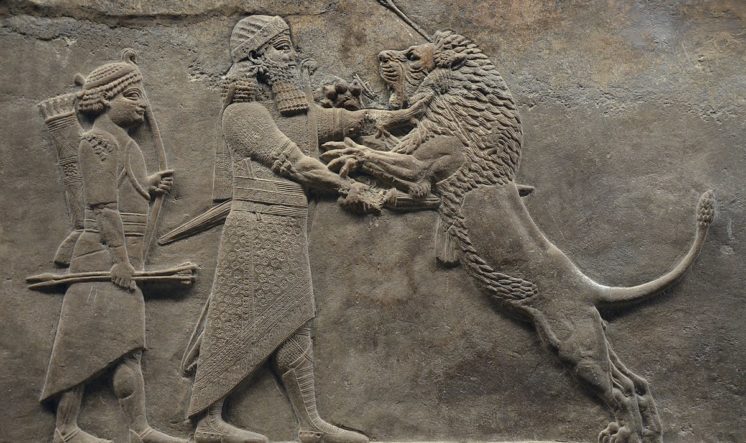
The valuable excavations of tens of thousands of clay tablets, statues, and monuments from the soil of Nineveh and Assyria show that we are the descendants of those Assyrians who created a great civilization that contributed significantly to the development of humanity.
The goal here is to put an end once and for all to the use of excommunications, to end dependence on the major clan families, and to end dependence on those with significant financial influence. It is impossible to resist the surging tide calling for the reform and democratization of the church; rather, we must collaborate with the new generation in all areas—national, cultural, and social—and shed our medieval mindset in order to manage our people’s civil and religious “affairs.”
Only this can ensure the growth and flourishing of our church and enable our people to preserve their historical name and language, their traditions, and their culture. By doing so, we can take a major step forward in the interest of our people, our church, and all of humanity.

